
When Your New Building Changes the Standard — and Everything Else Has to Catch Up
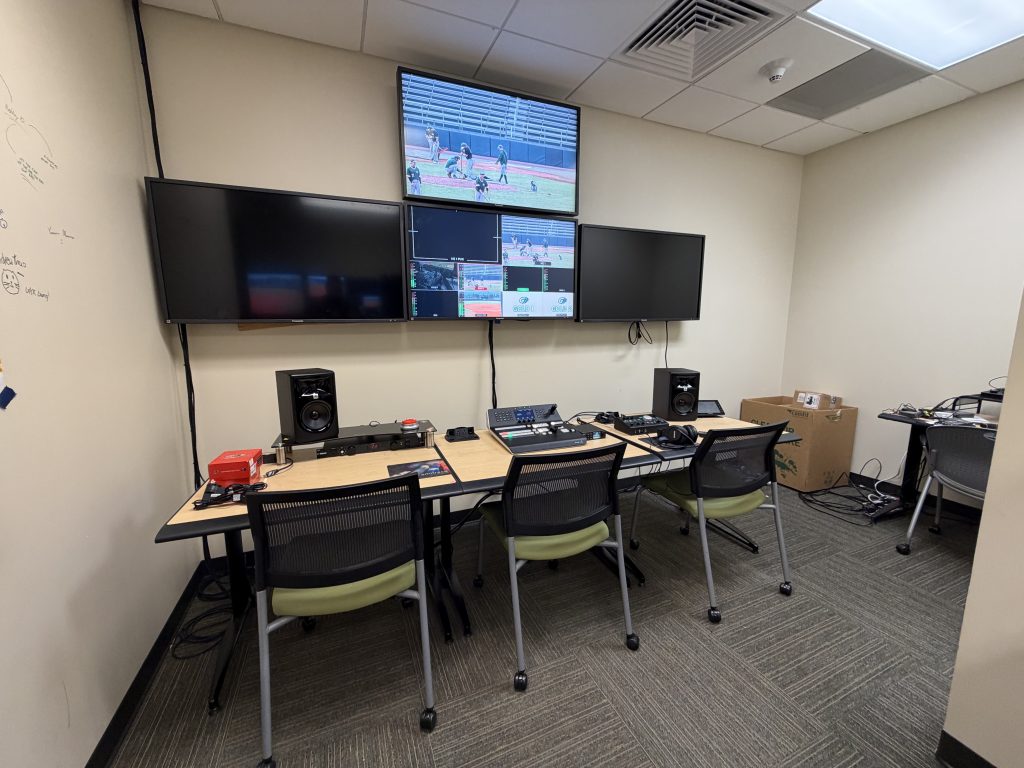
Georgia Gwinnett College Athletics had a new convocation center.
Brand new. State-of-the-art. A Blackmagic control room that would make any broadcast director stop and take a second look. Their student interns trained on it, got comfortable with the workflow, and started producing live events at a level that matched the facility.
Then they walked across campus to cover a baseball game.
They sat down in front of a TriCaster.
That gap — between what the new building required and what the rest of campus still ran — is more common in college athletics than most people acknowledge. A new facility raises the standard. But the infrastructure connecting everything else is still running the old playbook. And every time a student intern has to switch platforms, or a technical director has to remember which system handles which venue, or the IT department gets called in because an NDI stream dropped on a shared campus network — the gap costs something.
It costs time. It costs confidence. It costs the reliability you need on game day.
Two Workflows Is One Too Many

The problem Matthew Mahony faced at Georgia Gwinnett College wasn’t a lack of capability. GGC had been producing live events for years. The equipment worked. The team figured it out.
But “figuring it out” is different from operating with confidence.
When Mahony decided to move GGC’s outdoor venues to a fiber infrastructure and unify the entire program on Blackmagic, it wasn’t just a hardware decision. It was a decision about what the program should feel like to run – and what student interns should be able to do after one training cycle instead of two.
Amitrace came in and built that.
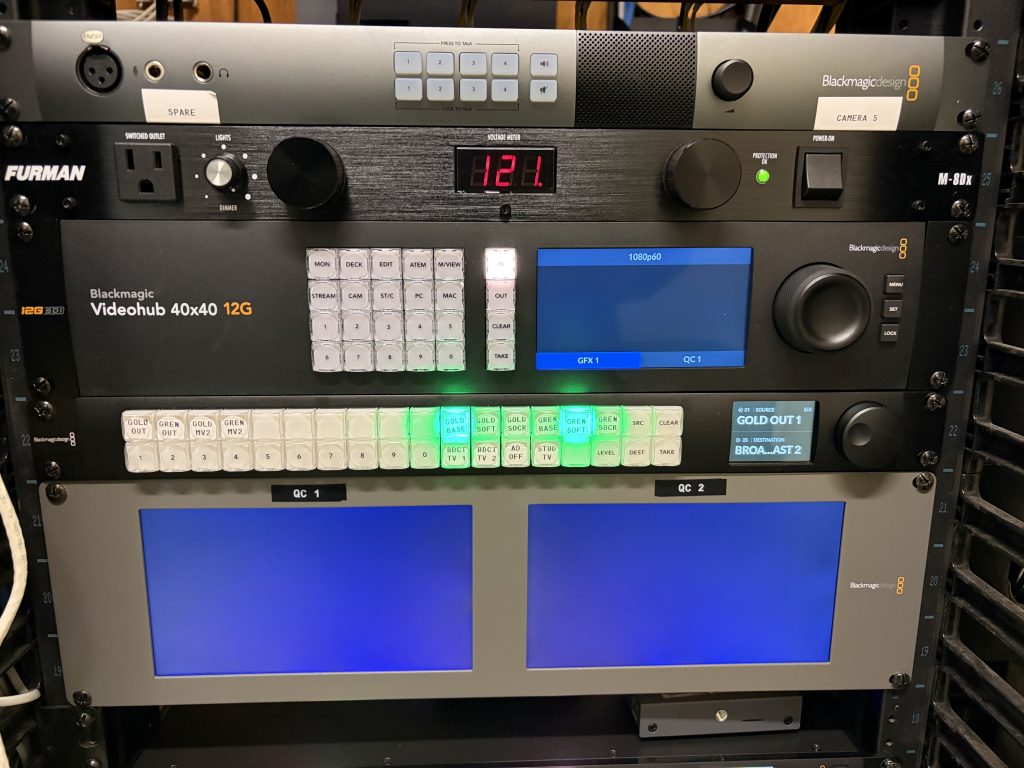
CommScope fiber panels connecting the athletic facilities. Two ATEM 2 M/E Constellation HD switchers at the heart of the production workflow. ATEM 1 M/E Advanced Panels for hardware control. Magewell NDI-to-SDI converters to bridge the existing graphics pipeline into the new system. A Blackmagic Web Presenter for streaming. A rack that the IT department walked up to, looked at, and complimented — without being prompted.
That last part matters more than it might sound.
The Rack That Made IT Stop and Say Something

When a college IT department compliments an AV install for cable management and labeling, something went right.
It’s not a standard compliment. IT departments have seen enough rushed rack builds — unlabeled cables, undocumented paths, fiber runs that only the original installer can trace — to know the difference. When they walked in and saw what Amitrace built, they said something. Mahony noticed.
He also noticed what happened a few weeks later, when a question came up about a setting he couldn’t figure out. He called Tom White. Tom walked him through it on the phone, then came by in person to show the team a feature they hadn’t started using yet.
That’s the part of this business that doesn’t show up on a spec sheet.
Mahony describes working with Amitrace as a positive experience, citing their availability and communication in helping achieve project goals.
And in one sentence: “The only thing better than the people that work there, is their ability to bring a vision to reality.”
What the Program Looks Like Now
GGC Athletics can now broadcast multiple events from different facilities simultaneously – with distribution to in-house monitors across venues built into the same infrastructure. Student interns train on one platform. One workflow. The same commands whether they’re covering baseball or softball or anything else on campus.
Mahony puts it plainly: “Now we have a singular training program for student interns on the one Blackmagic workflow instead of two – Blackmagic AND Tricaster. We also have confidence in our equipment’s functionality and budget relief moving forward.”Confidence in your equipment’s functionality. That’s a sentence worth pausing on.
In live sports broadcasting, the moment you’re not confident in your infrastructure is the moment you’re managing the broadcast and managing the risk at the same time. Those are two different jobs. The best production teams only have to do one of them.
GGC got there by replacing what wasn’t working with something built to last — and by working with a partner who stayed in it after the install day was over.
A Note on What This Kind of Project Required
This wasn’t a fast build. It was an multi-day engineering project – fiber runs, rack design, system commissioning, documentation, and training. The schematic was part of the deliverable. The relationship was part of the deliverable.
If you’re running college athletics broadcast operations and you’re managing a split workflow, or you’re watching your new facility raise the standard while your older venues hold it back — that gap is solvable. It’s a planning conversation, not a crisis response.
Amitrace has been designing and installing broadcast infrastructure across the Southeast since 1986. College programs, high school districts, new builds and full migrations.